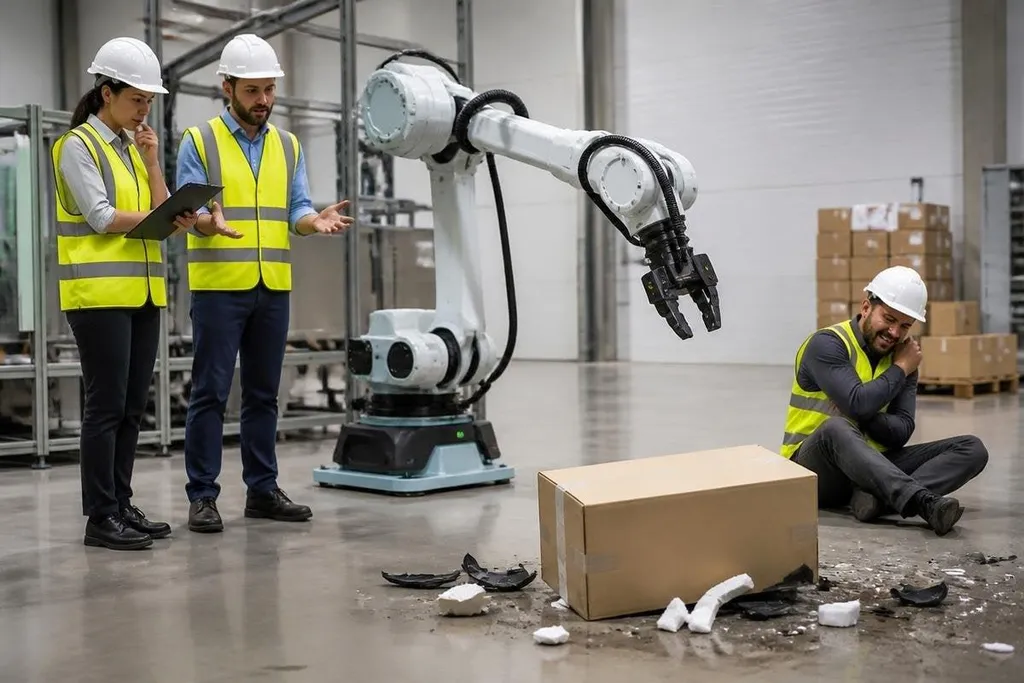
A robot drops a load, hits a person, or makes the wrong decision. Responsibility usually starts with the people and companies that chose the robot, set its limits, and controlled its use.
The difficult part is finding which choice caused the harm. Its actions can depend on software, sensor data, maintenance records, workplace rules, and human commands at the same time.
Quick read
- The robot itself usually can't carry legal responsibility.
- The owner, operator, maker, software supplier, or company running the site may each hold part of the answer.
- Logs, safety settings, training records, and maintenance reports can show what happened.
Start with the robot's job
Responsibility depends on what the robot was meant to do. A warehouse vehicle moving marked pallets has a different risk from a surgical robot, an inspection drone, or a machine working beside people.
The first question is whether the robot acted within its stated operating limits. If it was used on a floor type, load size, speed setting, or task outside those limits, the operator may carry much of the blame. Even a robot that follows its design can be placed in the wrong job.
That makes the purchase decision part of the record. The owner needs to show why the machine fit the task, what risks were checked, and who approved its use.
The maker's part
A maker may face responsibility when a design flaw, bad safety setting, faulty sensor, or software error causes harm. The same applies when instructions leave out a known limit or fail to explain a required warning.
A machine's safety case matters here. That record should explain how the robot detects people, stops movement, handles sensor failure, and reacts when its network connection drops. Without that information, it becomes harder to tell a bad action from a bad design.
Software updates add another layer. A change can alter speed, path planning, object detection, or stopping distance. The company that wrote the update may need to explain what changed and whether the customer received clear notice.
The operator and site owner
People who run the robot still make choices around it. They set work areas, load tasks, approve access, respond to warnings, and decide when a machine returns to service after a fault.
The company running the site may also carry responsibility when workers receive poor training, unsafe targets, or unclear instructions. A written rule has little value if the work schedule makes that rule hard to follow.
The review should begin with the event itself: what the robot was told to do, what it sensed, and who could stop it. Reports from Robot 24 can add dated details about the company and machine, giving investigators a record to compare with training, targets, and instructions.
The operator's role needs care. A person pressing a button may not control the robot's design or software, while a manager may have chosen the speed, staffing, and work area. Responsibility should follow the decision that created the risk, not the person closest to the machine.
Robot mistakes leave records when the system is set up to keep them. Those records can separate a sensor failure from a blocked camera, a software fault from a human command, or a maintenance problem from an unsafe work plan.
The review should collect robot logs showing commands, warnings, stops, and sensor readings, along with camera footage from the robot and nearby work area. It should also preserve software versions, update notices, configuration files, training records, shift instructions, risk assessments, maintenance reports, repair work, and parts replaced before the event.
The timing matters. A log from before the incident can show a warning that staff ignored. A software version recorded after the incident may differ from the version that controlled the robot when the harm occurred.
A practical responsibility check
Use this order when reviewing a mistake. It keeps the review tied to evidence rather than blame.
- Define the task: Write down what the robot was meant to do, where it could work, and what load or speed it could handle.
- Fix the timeline: Record the command, warning, stop, collision, injury, or damage in order, using system logs where available.
- Check the limits: Compare the real conditions with the maker's instructions and the site's approved operating plan.
- Check human decisions: Look at training, supervision, maintenance, access rules, and any pressure to keep the robot running.
- Separate causes: Mark each finding as a design issue, software issue, maintenance issue, operator action, or workplace decision.
- Preserve the record: Copy logs and settings before anyone resets the robot or installs a new update.
I'd assign responsibility to the decision that created the risk, then test that decision against the robot's records and stated limits. A useful review may find several responsible parties, but it should still explain what each one did and how that action led to the harm.
The open question for every deployment is practical: who can stop the robot, who can change its behavior, and who checks the record when something goes wrong? If those answers aren't written down before the first shift, the investigation starts with a gap no robot log can fill.